10 Minimalist Kitchen Organization Tips
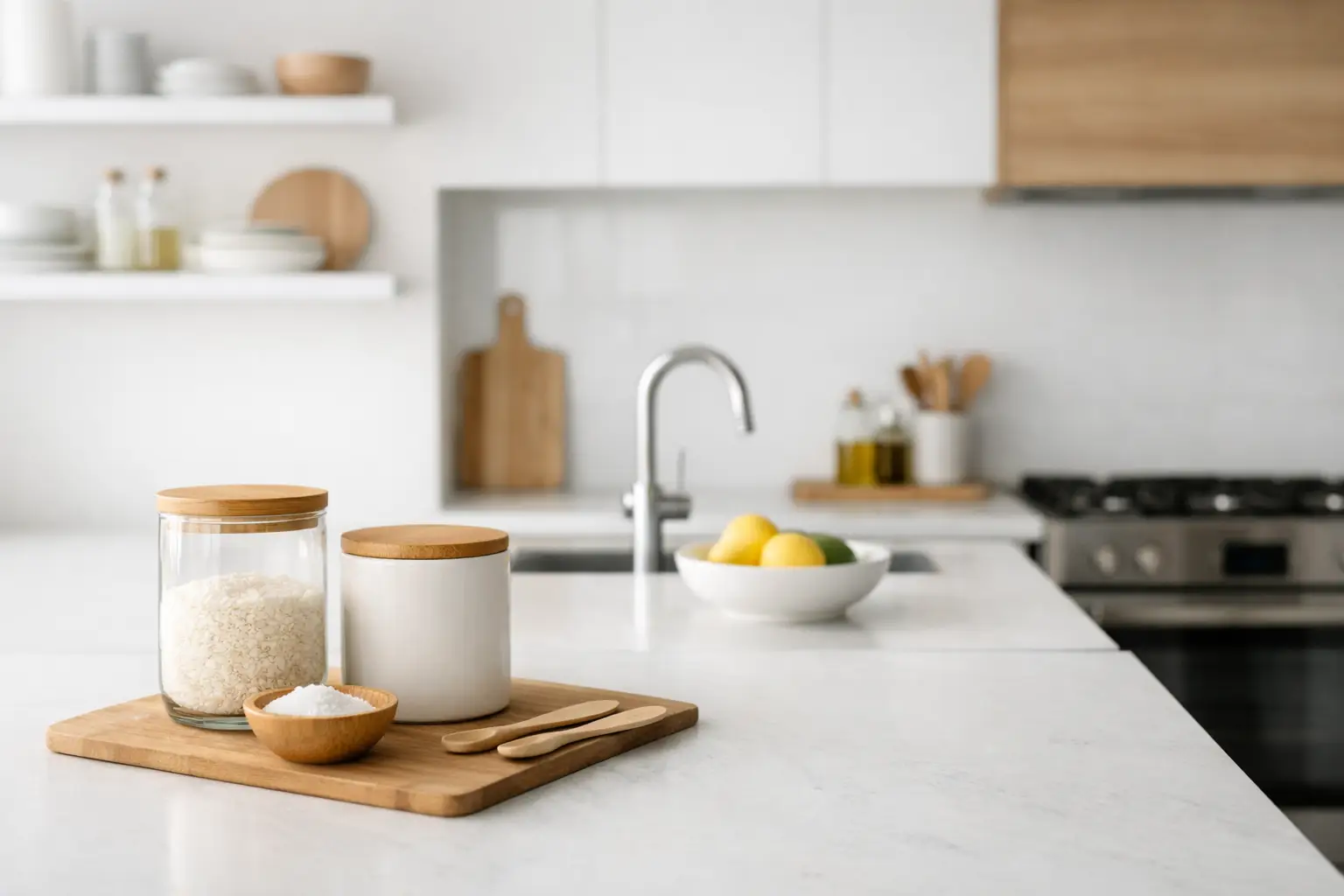
A crowded counter can make even a beautifully designed kitchen feel unfinished. The most effective minimalist kitchen organization tips are not about owning as little as possible. They are about choosing what earns a place in view, giving every essential a considered home, and making daily rituals feel calmer from the first cup of coffee to the final cleanup.
A minimalist kitchen should still support the way you actually live. If you bake every weekend, your stand mixer may deserve prime cabinet space. If your family packs lunches each morning, a well-stocked prep zone is more valuable than an empty drawer. The goal is refined function, not deprivation.
1. Begin With the Countertops
Counter space is visual real estate. When it is covered in small appliances, mail, utensils, and half-used pantry goods, the room loses its sense of ease. Start by removing everything from the counters, then return only the items used almost every day.
For many households, that means a coffee maker, a knife block or magnetic strip, and perhaps a carefully chosen cooking utensil crock. Select pieces with clean lines and quality finishes, because the items left out become part of the kitchen’s design. Store everything else based on how often it is used, not where it happened to fit first.
A useful standard is simple: if an item does not make cooking easier several times a week, it probably does not need permanent counter placement.
2. Organize by Task, Not by Product Type
A kitchen feels more intuitive when its contents follow your routines. Rather than placing all tools of one category together, create zones around the work you do: prep, cooking, baking, serving, coffee, and cleanup.
Keep knives, cutting boards, mixing bowls, and measuring tools within easy reach of your main prep surface. Put pots, pans, and cooking utensils near the range. Reserve a drawer or cabinet near the dishwasher for everyday plates, glasses, and cutlery so unloading becomes almost automatic.
This approach is especially valuable in compact kitchens, where every extra step adds friction. In a larger kitchen, it prevents elegant cabinetry from becoming a place where useful items disappear behind beautiful doors.
3. Edit Duplicates With a Realistic Eye
Minimalism begins with an honest inventory. Most kitchens hold more duplicates than their owners realize: three vegetable peelers, six travel mugs, stacks of plastic containers without lids, and specialty gadgets used once a year.
Keep the best version of each everyday tool. A well-made chef’s knife, durable skillet, and set of versatile storage containers will serve you better than a drawer full of mediocre alternatives. This is where quality matters. Fewer pieces can feel more luxurious when each one is a pleasure to use.
There are exceptions. A busy household may need multiple water bottles or lunch containers, while frequent hosts may require more glassware and serving pieces. Edit according to your real life, not an unrealistic vision of a perfectly spare home.
4. Give Drawers Clear Boundaries
Drawers become cluttered when they are asked to hold too many unrelated things. Use simple dividers to create dedicated sections for utensils, foil and wrap, cooking tools, or linens. The purpose is not to make every drawer look staged. It is to stop items from drifting into an unsearchable pile.
Avoid overcomplicating the system with tiny compartments for every individual tool. A few generous sections are easier to maintain and more adaptable when your needs change. Keep the items you reach for most in the front or top drawer, where they are visible at a glance.
For deeper drawers, consider vertical storage for pans, lids, cutting boards, and baking sheets. It makes selection easier and eliminates the familiar clatter of lifting three items to reach the one you need.
5. Make the Pantry Feel Like Part of the Room
A pantry does not need matching containers from floor to ceiling to feel polished. It needs enough consistency to make food easy to see, use, and replace. Begin by grouping categories such as grains, snacks, breakfast items, baking supplies, and canned goods.
Transfer only the staples that benefit from airtight storage or are used frequently. Clear containers can make a small pantry feel more orderly, but they also create a refilling task. If decanting will become another neglected chore, use attractive bins and keep packaged items in their original form.
Place everyday staples at eye level. Store backstock, entertaining supplies, and occasional ingredients higher up or in less accessible areas. A labeled basket for unopened extras keeps bulk purchases from taking over every shelf.
6. Create a Quiet Coffee or Beverage Station
The morning routine deserves its own intentional space. Group coffee, tea, mugs, sweeteners, and everyday drinkware near the machine or kettle. A tray can bring small pieces together on the counter, giving the arrangement a deliberate, tailored appearance rather than a scattered one.
Limit the station to what supports your current routine. A collection of novelty mugs may be meaningful, but it does not need to occupy the most convenient shelf. Display a small selection of favorites and store the rest for guests or seasonal rotation.
The same principle works for sparkling water, smoothie supplies, or evening tea. A defined beverage zone reduces visual noise and makes hosting feel more gracious with very little effort.
7. Use Vertical Space With Restraint
Walls, cabinet doors, and the inside of pantry doors can offer valuable storage, especially for renters and small-space households. Hooks can hold aprons or oven mitts. A slim rail can keep frequently used utensils accessible. Cabinet-door racks can organize wraps, spices, or cleaning supplies.
The trade-off is visibility. Vertical storage works best when it displays a limited number of attractive, useful items. Too many hanging tools can make a kitchen feel busy, even when everything is technically organized. Choose one or two vertical solutions that solve a real problem and leave the rest of the walls open.
8. Treat Food Storage as a System
Food containers are a common source of cabinet frustration because they multiply quickly and rarely stack well. Choose one or two nesting container styles with matching lids, then keep only the quantity your household uses between dishwasher cycles.
Store lids vertically in a narrow organizer so they do not slide beneath the containers. Reserve larger containers for batch cooking and leftovers, while keeping smaller options near the front for snacks and prepared ingredients. If a container is stained, warped, missing a lid, or never chosen, it has already made the decision for you.
A streamlined storage system also reduces food waste. When leftovers are visible, easy to pack, and simple to identify, they are far more likely to become tomorrow’s lunch.
9. Build a Small Reset Into Every Evening
Organization is less about the initial transformation than the return to order. A five-minute evening reset keeps a minimalist kitchen from slowly collecting clutter. Put away clean dishes, clear the counter, return stray items to their zones, and check that the sink is ready for the next day.
This is not a demand for perfection. Some nights will end with a drying rack full of dishes or a countertop covered in school papers. The value lies in having an uncomplicated system that is easy to restore when life gets busy.
10. Choose Storage That Deserves to Be Seen
The most enduring minimalist kitchens balance concealed storage with a few beautiful details. A sculptural fruit bowl, a solid wood cutting board, or a ceramic canister can add warmth without introducing clutter. Choose materials that age well and complement the rest of the room: glass, wood, stone, brushed metal, and thoughtfully finished ceramics.
At Vellenor, elevated living is often found in these practical decisions. A kitchen becomes more inviting when the pieces you use every day combine craftsmanship with purpose, rather than competing for attention.
The best organized kitchen is not the one with the fewest possessions. It is the one that gives you room to cook, gather, and enjoy the home you have created. Start with one drawer, one shelf, or one counter section, then let each thoughtful choice make the next one easier.










Leave a comment