Smart Air Purifier Review: What Premium Homes Need
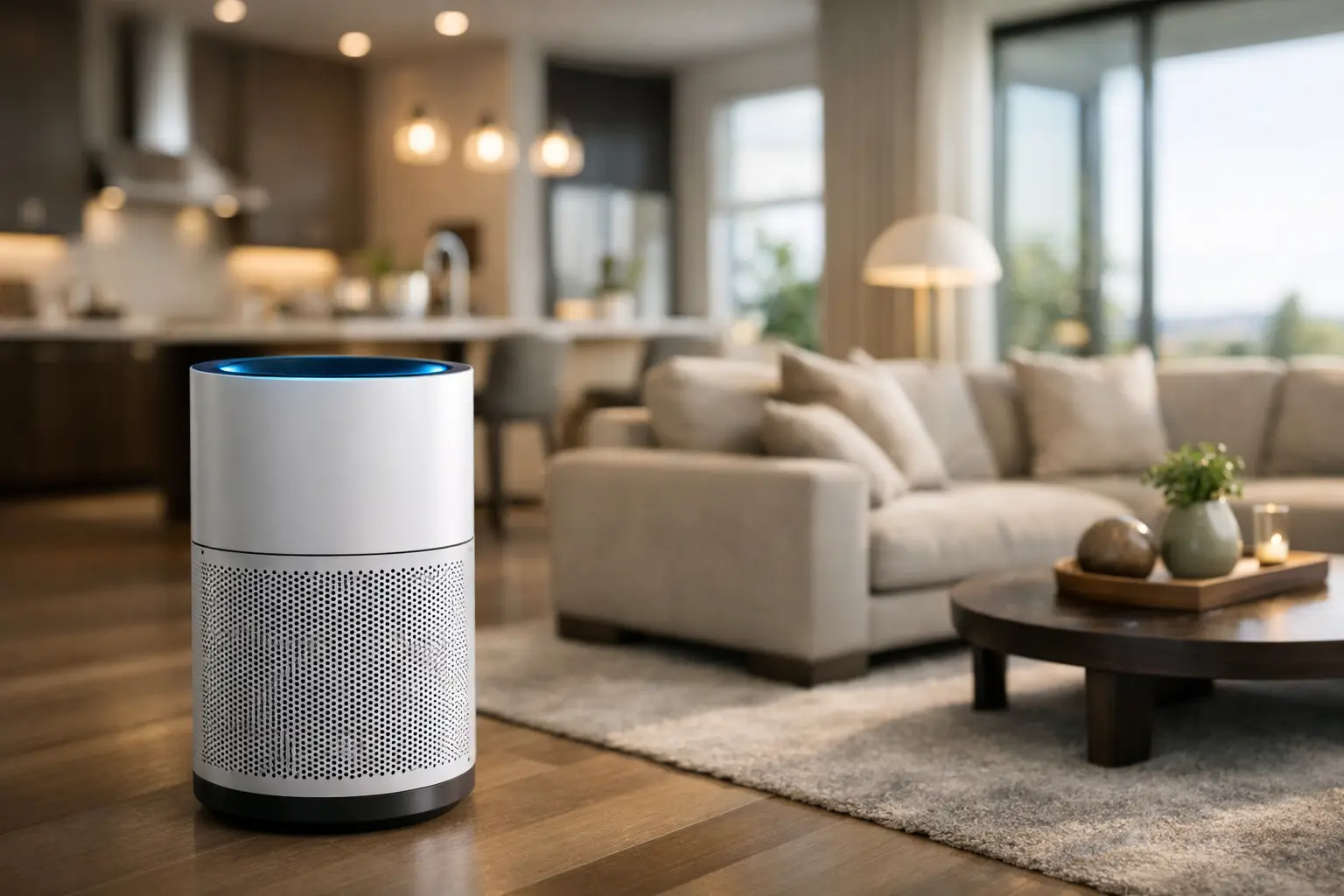
A purifier earns its place in a thoughtfully designed home when it does more than move air. It should sense what has changed, respond without constant adjustment, and preserve the calm of the room while it works. This smart air purifier review looks beyond marketing features to the details that shape everyday satisfaction: filtration, sensor accuracy, quiet performance, design, and control.
For households balancing pets, cooking, seasonal allergies, city dust, or simply a preference for a fresher-feeling space, a smart model can be a meaningful upgrade. The right one brings a more considered kind of comfort to bedrooms, living areas, home offices, and nurseries. The wrong one becomes an expensive glowing object that is too loud to use at its highest setting.
Smart Air Purifier Review: The Standard That Matters
A smart purifier pairs physical filtration with connected controls and automated behavior. Most models use particle sensors to monitor airborne matter, then raise or lower fan speed in Auto mode. Their companion apps typically provide air-quality readings, remote controls, scheduling, and filter-life alerts. Premium options may add odor or gas sensing, voice-assistant compatibility, child locks, and more detailed room history.
Those features are useful only when the core machine is excellent. Strong filtration, a properly sized fan, dependable sensors, and a well-sealed housing matter far more than an impressive app dashboard. A refined purchase starts with the basics: Can this unit clean the intended room effectively at a volume you will actually tolerate? Does it fit the visual language of your home? Are replacement filters straightforward to find and reasonably priced?
The most convincing smart purifiers make technology feel almost invisible. In Auto mode, they remain subdued while the room is clean, then respond promptly when dinner is cooking, a pet shakes off after a walk, or pollen rises through an open window. That is convenience with a purpose, not technology for its own sake.
Filtration Comes Before Connected Features
Look for a multi-stage system designed to address the concerns you actually have. A pre-filter catches larger debris such as hair and dust, helping the main filter last longer. A high-efficiency particle filter captures fine particulate matter, including many common allergens, smoke particles, and dust. An activated-carbon layer is the element to watch if cooking odors, pets, or outdoor smoke are regular concerns.
Not all carbon filters perform alike. A thin carbon coating can freshen a room after light cooking, but it may not make a noticeable difference against persistent odor or volatile organic compounds. If odor reduction is a priority, choose a purifier with a substantial carbon component and clear information about its filter construction.
HEPA-style language also deserves a closer look. A true HEPA filter is generally a stronger sign of serious particle-filtration performance, though the purifier’s overall design still matters. Air can bypass even a high-quality filter if the unit is poorly sealed. In a premium purchase, the filter, housing, and air path should work as one considered system.
CADR and Room Size Tell a More Honest Story
A stylish compact purifier may be ideal beside a bed, but it cannot carry an open-concept main floor by itself. Check the clean air delivery rate, commonly called CADR, along with the manufacturer’s room-size recommendation. More importantly, see whether that recommendation reflects a single air change per hour or several. For allergy-prone households and rooms that see regular activity, stronger air turnover is generally more useful.
A practical rule is to buy for the room at a higher-than-minimum setting, not merely for the number printed on the box. A purifier that is slightly oversized can maintain cleaner air at a lower, quieter fan speed. That extra capacity often feels more luxurious than a smaller machine that must run at full power all afternoon.
Placement changes results, too. Give the intake and outlet breathing room rather than tucking the unit tightly behind furniture. Keep it away from curtains, avoid placing it directly in a corner, and choose a position that does not blow air uncomfortably toward where you sleep or work. One well-sized unit in the right location can outperform several small units placed as an afterthought.
Sensor Accuracy Is Helpful, Not Absolute
Smart purifiers often display a reassuring color scale: green for clean, amber for moderate, and red for poor air. Treat this as a useful guide rather than laboratory truth. Sensors vary in quality, can react differently to humidity, and may take time to recognize a sudden shift. A unit near a kitchen may read very differently from one across the room, even when both are functioning correctly.
The best experience comes from watching patterns. If the purifier ramps up after cooking and settles once the air clears, the system is doing its job. If it stays on high for hours after a brief event, or repeatedly shifts speeds in an otherwise quiet room, its automation may be overly sensitive. Many sophisticated models let you adjust preferred sensitivity or create schedules that better suit your household rhythm.
For homes with gas appliances, active cooking, wildfire smoke, or known air-quality concerns, a purifier is a valuable layer of support, not a replacement for ventilation, source control, or a properly maintained HVAC system. Smart technology is most useful when it helps you respond earlier and more consistently.
Quiet Performance Defines Daily Use
Noise is one of the least glamorous specifications and one of the most important. A purifier can have exceptional cleaning power, but it will not improve a bedroom if its effective setting disrupts sleep. Look beyond the lowest decibel claim. Nearly every machine is quiet on its lowest setting. The meaningful question is how it sounds at medium and high speeds, where it may need to operate during a real air-quality event.
The character of the sound matters as much as the volume. A smooth, low fan hum often fades into the background. Whistling vents, buzzing motors, rattling panels, and abrupt speed changes are more distracting in an otherwise polished room. Sleep mode should dim or fully switch off display lights, while still providing enough circulation to be worthwhile.
Design Should Complement the Room
Air care no longer has to look clinical. A well-chosen smart purifier can sit comfortably beside a sofa, beneath a console, or near a bed without interrupting the room’s composition. Neutral finishes, clean proportions, discreet controls, and a cord that can be managed neatly all make a visible difference.
Consider maintenance as part of the design review. Can the filter be changed without wrestling with panels? Is the intake easy to vacuum? Does the pre-filter collect pet hair in a way that is simple to clean? The most elegant object is one that remains easy to live with after the first month.
For pet owners, front or side intakes are often more practical than a low rear intake pressed against a wall. For families with young children, a stable base and dependable control lock add welcome reassurance. For renters, a compact unit with a restrained footprint offers a cleaner-air upgrade without asking for a permanent installation.
App Control Has a Clear Role
Remote controls are particularly useful when they solve a genuine household problem. Scheduling lets a purifier increase circulation before bedtime or after the workday. Filter alerts remove the guesswork from maintenance. A quick app check can also confirm that the unit is running before you return home after a smoky day or a pet-sitting visit.
Do not pay a premium for an app that you will never open. If you prefer simple controls, prioritize a reliable Auto mode and accessible buttons on the unit itself. If you enjoy connected-home routines, confirm that the app is easy to navigate and that core functions still work when Wi-Fi is unavailable. A purifier should never become less useful because a phone battery is low.
It is also reasonable to consider privacy. Choose brands that explain what their connected features collect and why. For most homes, there is little need for a purifier to gather more information than basic device settings and optional air-quality history.
The Ongoing Cost Is Part of the Purchase
A smart purifier is not a one-time expense. Filters commonly need replacement every six to 12 months, depending on the model, room conditions, and runtime. Pet hair, smoke, and heavy use can shorten that interval. Before choosing, calculate the annual replacement-filter cost and confirm that the model will remain supported.
Energy use is typically modest, especially at lower settings, but it is still worth considering if the purifier will operate continuously. The most satisfying choice combines efficient performance with adequate capacity, allowing it to clean consistently without constantly running at maximum output.
A premium smart purifier is worth considering when it brings together real cleaning ability, graceful automation, quiet operation, and a form that belongs in your home. Choose the capacity your room genuinely needs, favor filter quality over novelty, and let the final decision reflect how you want the space to feel. Cleaner air is a practical investment, but the lasting value is the ease of coming home to a room that feels calmer, fresher, and more carefully cared for.









Leave a comment