Smart Thermostat vs Programmable Thermostat
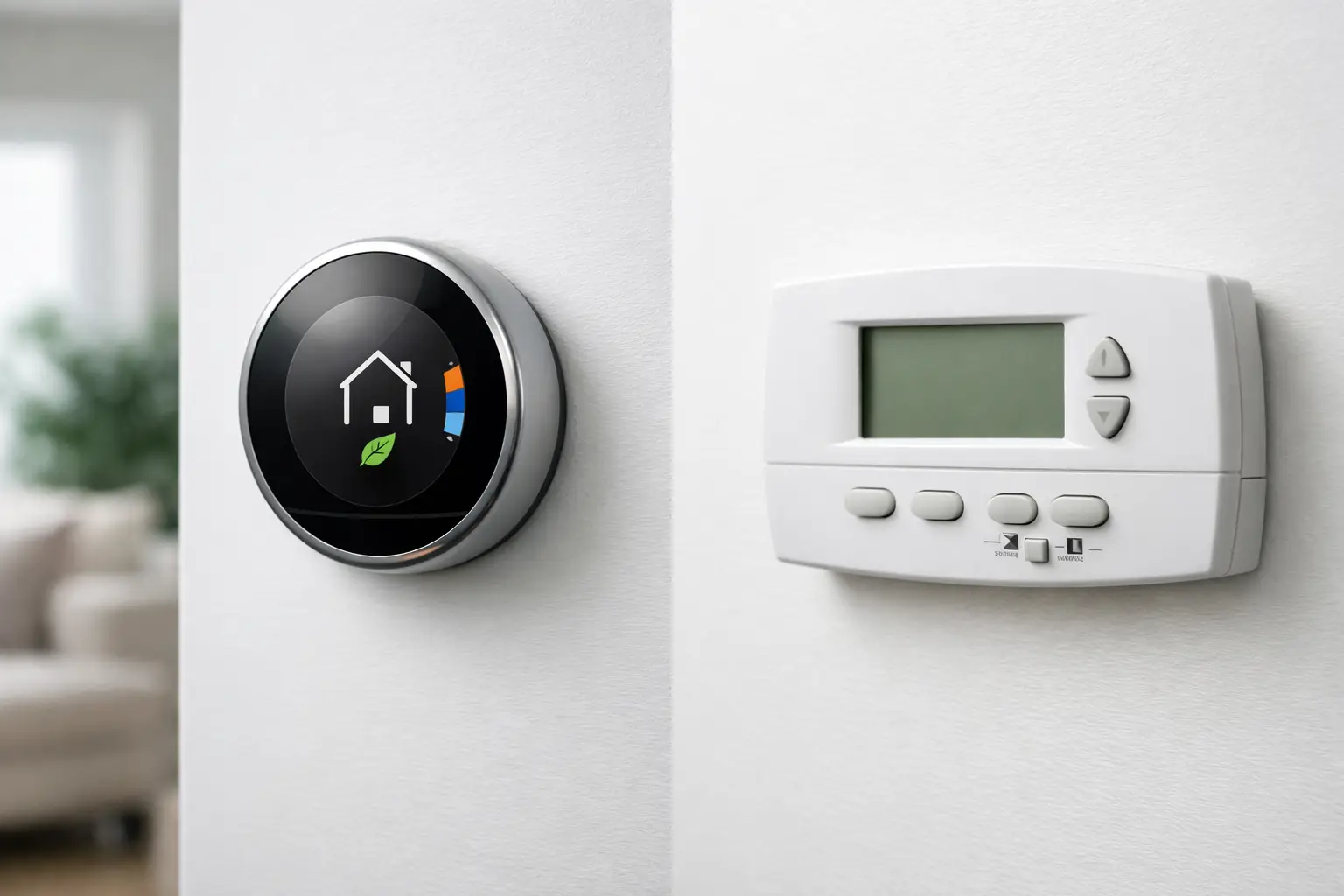
A thermostat is a small detail with an outsized effect on daily life. It decides whether the bedroom feels cool enough for restful sleep, whether the house is welcoming after a winter commute, and how much energy is used while everyone is away. In the smart thermostat vs programmable thermostat decision, the better choice comes down to how you live, not simply which model has more features.
For a thoughtfully designed home, climate control should feel considered rather than constant. Both options can reduce unnecessary heating and cooling, but they take very different approaches to convenience, personalization, installation, and long-term value.
Smart Thermostat vs Programmable Thermostat: The Core Difference
A programmable thermostat follows a schedule you set in advance. You might program the heat to lower at 10 p.m., warm the home before the family wakes, and ease back during weekday work hours. Once configured, it repeats that routine until you change it.
A smart thermostat can also follow schedules, but it adds connectivity and adaptive controls. Most connect to home Wi-Fi and are managed through an app, while select models can learn household patterns, use geofencing to recognize when residents are away, provide energy reports, and work with voice assistants or broader smart-home routines.
The distinction matters because a programmable model assumes your week is predictable. A smart model is designed for homes where plans shift, rooms have different needs, and comfort is something you want to manage from wherever you are.
Neither is automatically the right upgrade. A well-programmed conventional thermostat can be a quietly effective, budget-conscious choice. A smart thermostat earns its higher price when its extra control is genuinely used.
When a Programmable Thermostat Makes Sense
A programmable thermostat is ideal for a dependable routine. If the home is typically empty from 8 a.m. to 5 p.m., then occupied at similar times each evening and weekend, a fixed schedule can be highly effective. It offers a simple way to avoid heating or cooling an empty house without checking an app every day.
This option also suits shoppers who prefer uncomplicated controls. Many programmable models have clear wall-mounted displays and physical buttons, so guests, children, or less tech-focused family members can adjust the temperature without navigating a phone. There is no account setup, software update, or Wi-Fi signal to consider.
Cost is another advantage. The upfront investment is usually lower, and the interface is familiar. For a rental property, guest room, vacation cabin with a consistent occupancy schedule, or a straightforward HVAC replacement, that simplicity can be exactly what the space needs.
Still, programming can be less intuitive than it sounds. Some homeowners set a schedule once and rarely revisit it, even as seasons, work arrangements, or school hours change. If schedules vary week to week, the thermostat may spend energy following a plan that no longer reflects real life.
Best for predictable households
Choose a programmable thermostat when your priorities are a lower purchase price, easy on-wall operation, and a stable daily schedule. It is a practical solution, especially when you do not need remote access or a connected home ecosystem.
Where a Smart Thermostat Adds Value
A smart thermostat brings a more responsive approach to home comfort. Through a mobile app, you can raise the temperature before returning from a trip, turn down the air conditioning when plans change, or check the home’s settings without being in the room. For frequent travelers, busy families, and people who split time between home and office, that flexibility can be worth far more than the novelty of a connected device.
Many smart models offer scheduling that is easier to adjust than traditional programming. Instead of working through small buttons on a wall display, you can review the week from your phone and make a change in seconds. Some systems use learning features to suggest schedules based on your adjustments, while others use location-based settings to switch into an energy-saving mode after household members leave.
Energy reporting is another refined advantage. A smart thermostat may show how runtime changes with outdoor temperatures, point out periods of heavy use, or recommend a modest adjustment. These insights do not guarantee savings on their own, but they make household energy habits more visible. That is useful for anyone who values both comfort and thoughtful spending.
Smart-home integration can elevate the experience further. Depending on the model and compatible equipment, the thermostat may work with voice control, connected sensors, ceiling fans, humidifiers, or routines that adjust lighting and temperature together. A simple evening command can lower the shades, soften the lights, and set the room for relaxation.
The trade-off is complexity. Smart thermostats depend on reliable Wi-Fi for remote features, and setup may require an app, account, and occasional firmware update. Privacy-conscious shoppers should also review what data a manufacturer collects and how it is used. Premium convenience should never mean overlooking basic control over your information.
Best for changing schedules and connected homes
A smart thermostat is especially appealing when no two days look alike. It suits households with hybrid work schedules, active family calendars, pets at home during the day, multiple residences, or a preference for managing the home from a phone. It can also be a polished finishing touch in a renovation where design, efficiency, and modern functionality matter equally.
Compare Installation Before You Buy
The most advanced thermostat is only useful if it works with your HVAC system. Before choosing either type, check whether your system is compatible with the model you are considering. Most thermostats are designed for common central heating and cooling systems, but heat pumps, dual-fuel systems, boilers, radiant heat, and multi-stage equipment can have different requirements.
The C-wire, or common wire, deserves particular attention with smart models. It provides continuous power from the HVAC system to the thermostat. Many smart thermostats prefer or require one, though some include adapters or alternative installation methods. A programmable thermostat may run on batteries and may be easier to install where no C-wire is available.
If your home has an older system, unfamiliar wiring, or expensive equipment, professional installation is a wise investment. It protects the system, confirms compatibility, and gives you confidence that settings such as heat-pump auxiliary heat are configured properly. This is not the place to sacrifice care for a quick shortcut.
Placement matters as well. A thermostat located near direct sunlight, exterior doors, a kitchen, or a drafty hallway may read the room inaccurately. Smart room sensors can help address this issue by measuring temperatures in spaces that matter most, such as a nursery, bedroom, or home office. They are valuable, but usually an added expense and not necessary for every home.
Cost, Savings, and the Value of Convenience
A programmable thermostat often costs less at checkout. A smart thermostat typically costs more, especially when paired with room sensors or professional installation. The smart option may also lead to lower utility use if it consistently reduces heating and cooling when the home is vacant or adjusts more accurately to routines.
But savings are personal, not promised. A household with an already-disciplined schedule may see little difference between a properly used programmable model and a smart one. By contrast, a family that regularly forgets to adjust the thermostat, travels often, or comes and goes at irregular times may benefit considerably from smart controls.
Think beyond the energy bill. There is value in arriving home to a comfortable setting, checking a vacation property remotely, or noticing an unusually cold indoor temperature before it becomes a larger issue. For many buyers, that confidence is part of the return on investment.
How to Choose the Right Thermostat for Your Home
Start with your routine. If it is consistent, a programmable thermostat provides capable, unobtrusive control. If your day changes frequently, a smart thermostat removes much of the friction of keeping your climate settings aligned with real life.
Next, consider your home’s technical needs. Confirm HVAC compatibility, wiring requirements, and whether certain rooms run warmer or cooler than others. Then consider how you prefer to interact with the home. Some people value tactile controls and a simple schedule. Others appreciate app access, energy insights, and the ability to fine-tune comfort before walking through the door.
Aesthetic preferences belong in the decision, too. Today’s smart thermostats often offer slim profiles, refined displays, and finishes that sit elegantly alongside modern lighting, hardware, and wall decor. A programmable thermostat can be discreet and functional, but a well-chosen smart model can feel more intentional within a polished space.
The most satisfying upgrade is not necessarily the most connected one. It is the thermostat that quietly supports your routines, protects your comfort, and lets your home feel prepared for the life happening inside it.













Leave a comment