
How to Choose an Air Purifier for Your Home
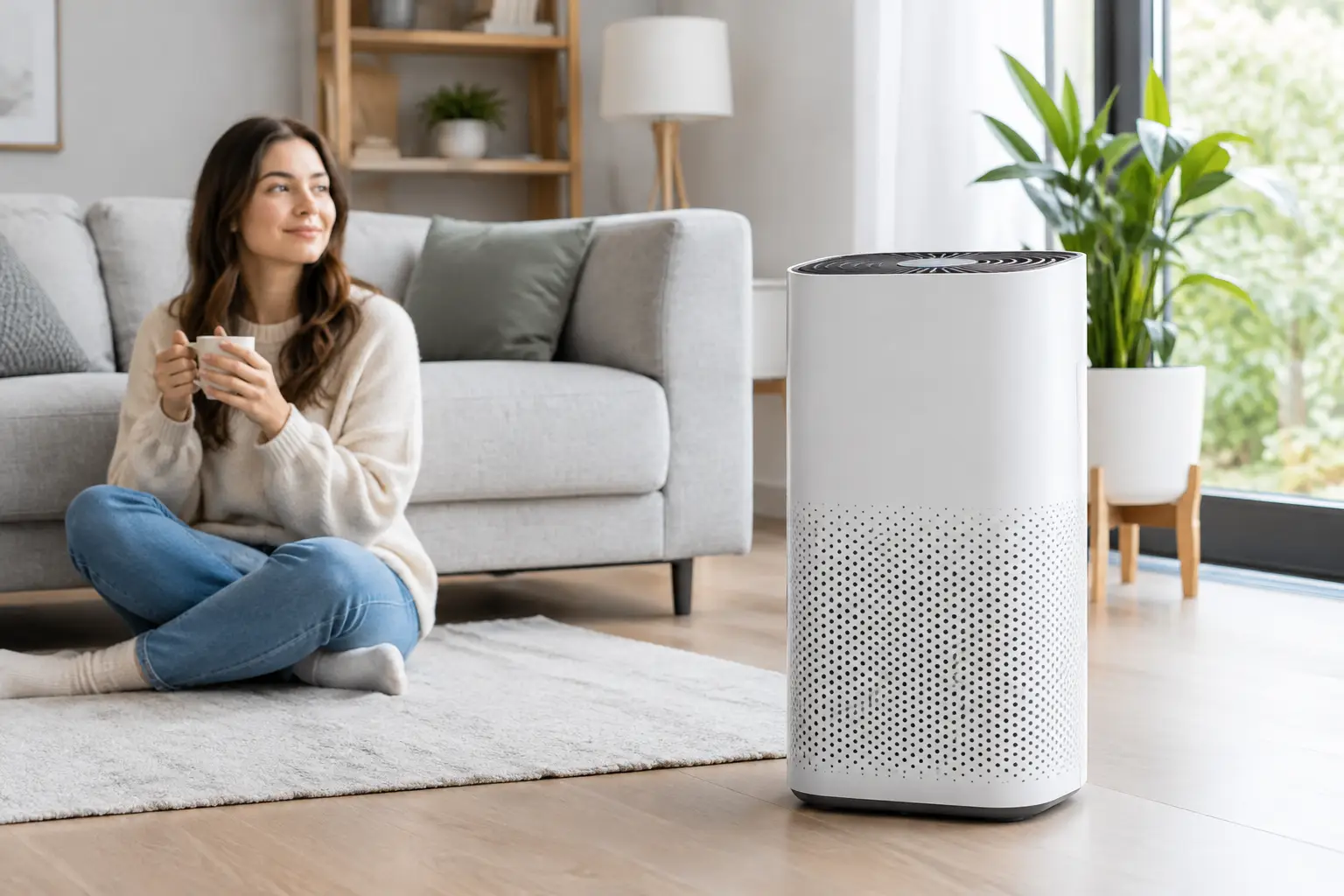
A beautiful home should feel as good as it looks. Yet cooking aromas, pet dander, seasonal pollen, city smoke, and everyday dust can linger long after a room has been styled to perfection. Knowing how to choose an air purifier means looking beyond a sleek exterior and finding a model that is genuinely suited to the way you live.
The right choice can make a bedroom feel calmer at night, keep a family room more comfortable during allergy season, or refresh a home office where windows stay closed for much of the day. The key is matching the purifier’s performance, filtration, and practical details to your room – not simply choosing the largest machine or the lowest price.
How to Choose an Air Purifier by Room Size
Start with the room where the purifier will spend most of its time. Measure its length and width, then multiply them to find the square footage. A 12-by-15-foot bedroom, for example, is 180 square feet. If ceilings are substantially higher than the standard 8 feet, treat the room as larger when comparing models.
Then look at the manufacturer’s recommended coverage and, when available, the Clean Air Delivery Rate, or CADR. CADR indicates how quickly a purifier can reduce airborne particles such as smoke, dust, and pollen in a tested setting. A higher number generally means faster particle removal, but it only helps if it is appropriate for your space.
For a refined everyday experience, choose a purifier rated for a room somewhat larger than the one you have. This allows it to operate at a lower, quieter setting while still delivering meaningful filtration. A unit rated for 400 square feet in a 200-square-foot bedroom is often a more elegant solution than a compact model that must run at full power all night.
Coverage claims are not always presented the same way. Some brands calculate coverage based on one air change per hour, while others reference multiple air changes. For rooms used for sleeping, relaxing, working, or spending time with pets, more frequent air cleaning is typically preferable. Read the fine print rather than relying on a large coverage number alone.
Choose Filtration for What You Want to Remove
Air purifiers are not all designed to address the same concerns. A considered purchase begins with the particles, odors, or pollutants that matter most in your household.
True HEPA for Fine Particles
For dust, pollen, pet dander, and fine airborne particles, seek a purifier with a true HEPA filter. This is the standard most shoppers want for everyday home use. Be cautious with vague descriptions such as “HEPA-style,” “HEPA-type,” or “HEPA-like.” These may offer some filtration, but they do not necessarily meet the same performance standard.
A pre-filter is also valuable. It captures larger debris, hair, and visible dust before they reach the main filter, helping preserve the HEPA filter and simplifying routine care. In homes with shedding pets, a washable or easily vacuumed pre-filter can be especially useful.
Activated Carbon for Odors and Gases
If cooking odors, pet smells, wildfire smoke, or traffic-related odors are a concern, look for activated carbon. Carbon can absorb certain gases and odors that a particle filter alone cannot capture. The amount of carbon matters: a thin carbon-coated sheet may help lightly, while a substantial carbon filter generally offers more noticeable odor control.
It is worth setting realistic expectations. No compact purifier can instantly erase every strong smell or solve a persistent source of moisture, mold, or chemical fumes. Ventilation, prompt cleaning, and addressing the source remain essential parts of a fresh home.
Be Selective About Extra Technologies
Some models include ionizers, plasma functions, UV lights, or other added technologies. These features may sound advanced, but they are not automatically necessary for effective home air cleaning. A well-sized purifier with strong mechanical filtration is often the clearest, most dependable choice.
If a purifier has an ionizer or similar setting, confirm that it can be switched off. Avoid models that produce ozone, which can irritate the lungs. Look for transparent product information and independent safety certification rather than being persuaded by technical language alone.
Consider Noise, Design, and Daily Living
An air purifier can only improve your space when you are comfortable leaving it on. Noise is therefore not a minor detail. Bedrooms and home offices benefit from models with a quiet sleep mode and a low fan setting that is soft enough for reading, calls, and rest.
Pay attention to the decibel rating, but also remember that sound quality is personal. A smooth, steady fan noise may fade into the background, while a high-pitched motor can feel distracting even at a similar rating. For nighttime use, a dimmable or fully switchable display is a thoughtful feature.
Design deserves consideration, too. A purifier is often visible in a living room, nursery, or carefully arranged bedroom. Choose a finish and silhouette that complement the space, but never let a compact profile compromise airflow. Air needs room to enter and leave the unit freely. A beautifully designed purifier that is undersized or tucked behind furniture will not perform at its best.
Decide Which Smart Features Are Worth It
Smart features can add convenience, particularly in busy households, but they should support performance rather than distract from it. An air-quality sensor can automatically increase fan speed when it detects higher particle levels. This can be helpful after cooking or when outdoor conditions change, though sensor accuracy varies by model.
App controls are useful if you want to check filter status, schedule operation, or turn on a purifier before arriving home. For many households, however, straightforward physical controls and a reliable auto mode are enough. Consider whether you will actually use a connected app before paying a premium for it.
A filter-change indicator is one feature with genuine everyday value. It removes guesswork and helps protect the purifier’s performance over time. Still, it is wise to check the filter visually and follow the replacement schedule, especially in homes with pets, frequent cooking, or heavy seasonal pollen.
Factor In Filter Costs Before You Buy
The purchase price is only the beginning. Replacement filters are an ongoing part of owning an air purifier, and premium performance depends on keeping them current. Before selecting a model, find out how often the filters need to be replaced, what they cost, and whether they are readily available.
A less expensive purifier with costly proprietary filters may become less appealing over several years. Conversely, a higher-quality model with sensible filter pricing can offer better long-term value and a more consistent experience. Avoid washing a HEPA or carbon filter unless the manufacturer specifically says it is washable. Water can damage filter media and reduce effectiveness.
Energy use is worth considering if the purifier will run continuously. Efficient models are designed for extended use without adding unnecessary strain to your utility bill. The most practical approach is often to run the purifier continuously on low or use auto mode, rather than waiting for a room to feel stale and turning it up only occasionally.
Place Your Purifier Where It Can Perform
Placement can make an excellent purifier feel underwhelming. Position it in the room where you spend the most time, with open space around the intake and outlet. Avoid pressing it against a wall, placing it behind a sofa, or hiding it in a corner crowded with décor.
For a bedroom, place it a few feet from the bed rather than directly beside your face. In a living area, choose a central location with clear airflow. Keep doors and windows closed when you want the purifier to work efficiently, particularly during high-pollen days or smoky outdoor conditions.
For larger open-plan homes, one purifier may not be enough. Air does not move evenly through hallways, around corners, or between floors. Two thoughtfully placed units can provide better results than one oversized machine attempting to serve an entire level.
Match the Purifier to Your Household
A pet household may prioritize a strong pre-filter, true HEPA filtration, and enough capacity to handle the main gathering space. For allergy-conscious shoppers, room-appropriate CADR and quiet overnight operation are often the priorities. In a kitchen-adjacent living space, activated carbon becomes more valuable, while a nursery may call for simple controls, a dim display, and exceptionally quiet operation.
If you are responding to wildfire smoke or a serious indoor air concern, select a purifier with clear particle-filtration credentials and appropriately high capacity for the room. An air purifier can be a helpful layer of care, but it does not replace professional guidance for ongoing mold, gas leaks, combustion issues, or unexplained respiratory symptoms.
The best air purifier is not necessarily the one with the longest feature list. It is the one you can place beautifully, run consistently, maintain with ease, and trust to support the comfort of the rooms where life happens most. Choose with that daily ritual in mind, and cleaner-feeling air becomes part of the home’s quiet luxury.








Leave a comment