12 Best Espresso Tools for Home
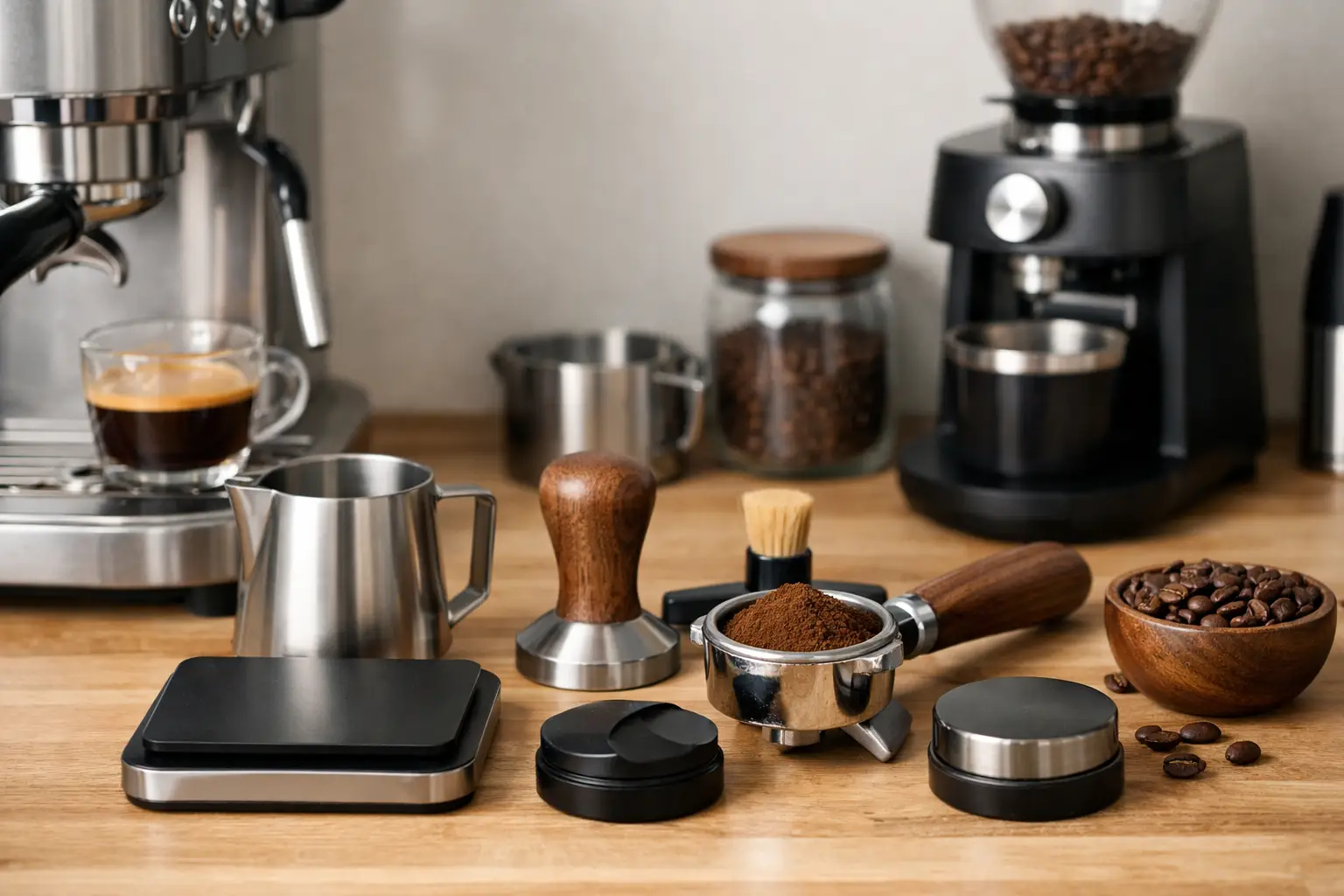
A beautiful espresso machine can anchor the whole kitchen, but the shot in your cup is usually decided by the tools around it. If you are searching for the best espresso tools for home, the smartest approach is not buying everything at once. It is choosing the pieces that improve flavor, consistency, and the look and feel of your daily routine.
For home espresso, the difference between frustrating and satisfying often comes down to a few well-chosen essentials. Some tools solve real extraction problems. Others make your setup cleaner, faster, and more enjoyable to use. The best home bar is not the one with the most accessories. It is the one built with intention.
What makes the best espresso tools for home worth buying?
The right tools do three things well. They improve consistency, support better workflow, and feel elevated enough to suit the space they live in. That matters for espresso because repetition is everything. If your grind shifts, your dose varies, or your puck prep is uneven, your results can swing from rich and balanced to thin and bitter in a single morning.
There is also a design consideration that many buyers care about more than they admit. Espresso tools tend to stay on the counter. A premium setup should feel considered, not cluttered. Materials, finish, storage footprint, and ease of cleaning all shape whether a tool becomes part of your routine or ends up in a drawer.
Start with the grinder, not the extras
If there is one upgrade that changes home espresso the most, it is the grinder. A capable burr grinder gives you control over particle size, which directly affects extraction time and flavor. Without that precision, even an excellent machine can only do so much.
For espresso, consistency matters more than speed. Look for a grinder designed specifically for fine adjustments, ideally with a range that lets you make small changes as beans age or humidity shifts. A premium grinder also tends to reduce clumping and retention, which helps keep dosing more predictable.
This is not the most glamorous purchase, but it is the one that usually earns the strongest return. If your budget is limited, put more into the grinder and less into decorative add-ons.
A precise scale quietly improves every shot
A scale is one of the least flashy tools on the counter and one of the most useful. Espresso responds to small changes, so weighing your dose and your final yield removes a lot of guesswork. It also helps you repeat the shots you actually like.
A good espresso scale should be compact enough to fit under your cup, fast enough to react in real time, and accurate to a tenth of a gram. Timer functions are especially helpful, since brew ratio and shot time often work together when dialing in.
For beginners, this tool builds confidence quickly. For experienced home baristas, it keeps standards high without adding effort.
Better puck prep starts with distribution
One of the more valuable modern additions to home espresso is the WDT tool, short for Weiss Distribution Technique. It sounds technical, but the idea is simple. Fine needles break up clumps in the coffee bed so water can move through more evenly.
This matters because clumped grounds can create channels, and channeling leads to uneven extraction. If shots are spraying, running too fast in spots, or tasting sharp and hollow, poor puck prep may be part of the problem.
A WDT tool is affordable, small, and surprisingly effective. It is one of the easiest ways to make your workflow feel more refined without committing to a major purchase.
A quality tamper should feel stable and balanced
Tampers are often included with machines, but included does not always mean well made. A premium tamper gives you a better fit in the basket, a more comfortable grip, and a level, controlled press.
The best choice depends on your preferences. Some people like a classic flat-base tamper with a solid weight. Others prefer self-leveling tampers that help reduce user error. If you are still developing technique, a calibrated or leveling design can bring more consistency. If you value tactile control, a traditional tamper may feel more satisfying.
What matters most is that it fits your portafilter basket correctly. Even a beautiful tool underperforms if the sizing is off.
A dosing funnel keeps your station cleaner
Espresso can be messy, especially with fine grinds and smaller baskets. A dosing funnel sits on top of the portafilter while you grind and distribute, helping keep coffee where it belongs.
This may seem like a minor convenience, but it improves workflow more than many buyers expect. Less waste, less wiping, and less frustration adds up over time. If you are building a setup that feels polished and efficient, this is the sort of tool that earns its place quickly.
It is especially useful when paired with a WDT tool, since stirring grounds without a funnel often sends coffee over the edge.
Knock boxes and mats protect the experience
The tools that support cleanup deserve more attention than they usually get. A knock box gives you a fast, tidy place to discard pucks, while a tamping mat protects both your countertop and your portafilter.
These are not flavor upgrades, but they do affect how enjoyable espresso feels at home. A premium coffee ritual should not leave your kitchen looking chaotic. If your machine sits in an open-plan space or a design-forward kitchen, these supporting pieces help the entire station look more intentional.
Choose finishes and materials that complement your machine rather than competing with it. Wood accents, matte black surfaces, and stainless details tend to age well visually.
Milk tools matter if you love cappuccinos and lattes
For milk-based drinks, a stainless steel steaming pitcher is essential. Size matters here. A smaller pitcher usually gives better control for single drinks, while larger sizes suit multiple servings. Shape matters too, especially if you care about smoother pouring and cleaner latte art.
A thermometer can help if you are learning milk texturing, though many home users eventually rely on touch and sound instead. The trade-off is convenience versus intuition. If you want repeatable results quickly, use the thermometer. If you prefer a cleaner setup, you may outgrow it.
For households that enjoy flat whites, cappuccinos, or cortados regularly, milk tools are not optional extras. They are core parts of the setup.
Espresso cups and glassware shape the ritual
Cup choice will not fix extraction, but it absolutely changes the experience. The right espresso cups retain heat better, present crema more beautifully, and bring a sense of occasion to a daily habit.
Thick-walled ceramic feels classic and elegant. Double-wall glass has a more modern look and lets you see the layers of the shot. Neither is universally better. It depends on whether you prioritize heat retention, aesthetics, or a lighter visual footprint on the counter.
This is where personal taste should lead. The best home espresso setup is not just functional. It should feel aligned with your space and your style.
Water deserves more attention than most home baristas give it
Many espresso frustrations get blamed on beans or machines when water is the real issue. Poor water quality can flatten flavor, create scale, and shorten the life of your equipment. Using filtered water is one of the simplest upgrades you can make.
Some home users are happy with a good filtration pitcher. Others prefer more specific mineral control, especially if they are already deep into espresso. There is no single right level of involvement here. If you want better taste and easier machine care, basic filtration is a practical starting point.
It is not the most exciting tool to shop for, but it supports both performance and longevity, which makes it a premium choice in the most practical sense.
Which tools are best for your setup?
Not every home bar needs every accessory. If you are just starting out, prioritize the grinder, scale, tamper, and a simple distribution tool. That combination improves the shot itself. If your espresso workflow already feels solid, look at the pieces that make the experience cleaner and more elegant, such as a dosing funnel, knock box, pitcher, and elevated glassware.
It also depends on how you use your machine. Someone making two straight espressos each morning has different needs than a household serving weekend lattes for four. Your ideal setup should match your habits, not somebody else’s online checklist.
For shoppers who want a more curated kitchen experience, that balance of performance and presentation matters. The strongest setups are not overloaded. They are edited. Every tool should either improve the cup, simplify the process, or make the ritual feel more refined.
A well-made espresso station has a quiet kind of luxury to it. It turns a daily caffeine habit into a small act of craftsmanship, and that is usually where the best home upgrades begin.












Leave a comment