
How to Choose a Massage Gun for Muscle Recovery
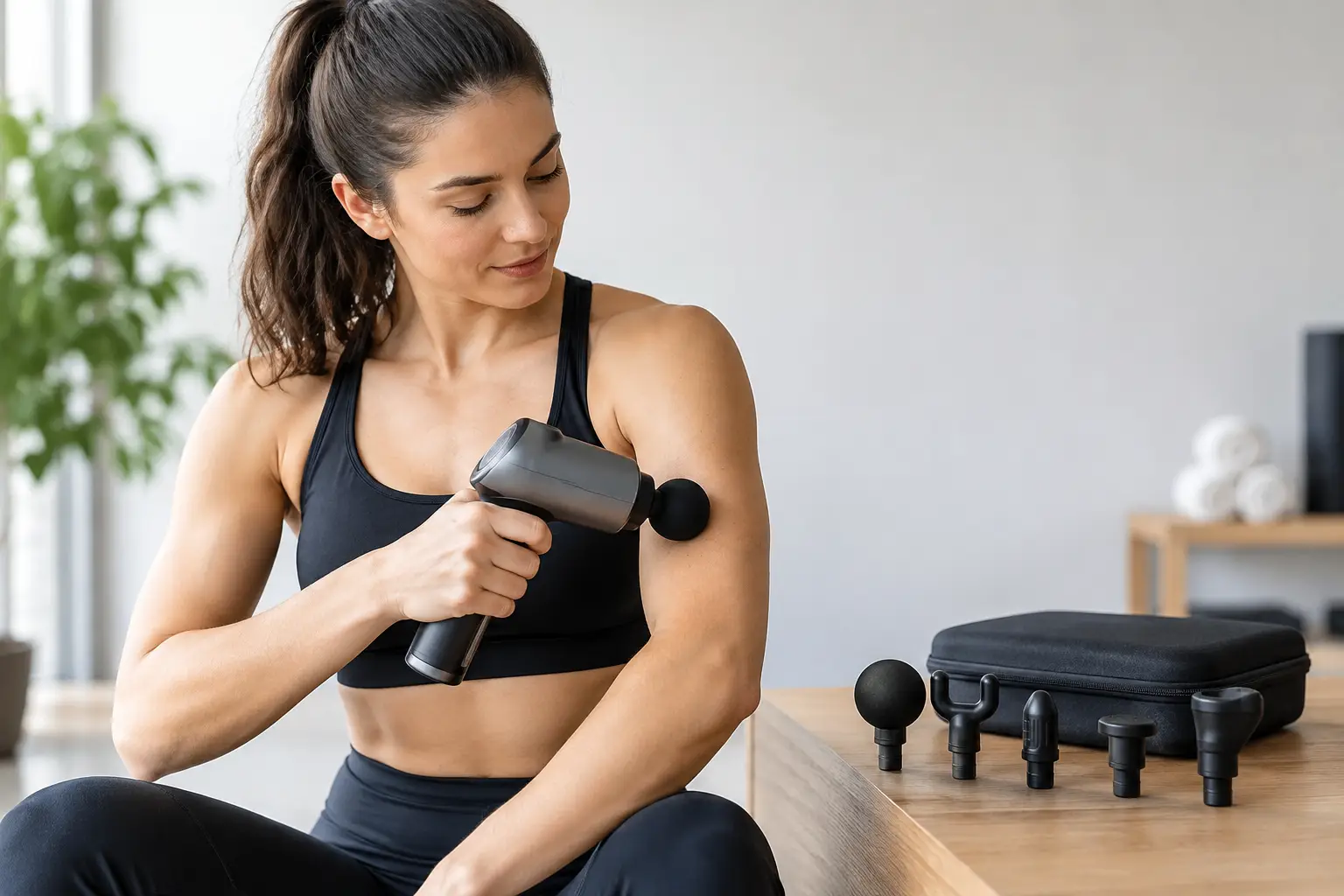
A massage gun can turn the few quiet minutes after a workout, a long flight, or a demanding workday into a more restorative ritual. But the strongest model is not automatically the best one. Knowing how to choose a massage gun for muscle recovery means looking beyond a dramatic product photo and choosing a tool that feels comfortable, performs consistently, and fits the way you actually move through your week.
For a premium addition to your wellness routine, prioritize thoughtful design as much as raw power. The right device should feel substantial in the hand, quiet enough to use without disrupting your home, and flexible enough to support everything from post-leg-day recovery to gentle tension relief around the shoulders.
Start With Your Recovery Routine
Before comparing speeds and attachments, consider when and where you will use the massage gun. A dedicated strength-training enthusiast may appreciate a more powerful device with a larger battery and deeper percussion. Someone who spends hours at a desk may prefer a lighter, quieter model for brief sessions on the upper back, glutes, calves, and feet.
Frequency matters, too. If you expect to use your device several times a week, ergonomics and battery life deserve extra attention. A compact model can be excellent for travel or occasional use, while a full-size massage gun often brings better reach, a more stable grip, and longer-lasting performance.
Think of it as a piece of wellness equipment, not a novelty purchase. The best choice is one you will reach for regularly because it feels easy, pleasant, and intuitive to use.
How to Choose a Massage Gun for Muscle Recovery: Key Specs
Massage guns use percussive therapy, meaning the attachment moves rapidly in and out against the muscle. Product descriptions can make every number sound essential, but two specifications offer the clearest picture of how a device will feel: amplitude and stall force.
Amplitude Determines How Deep It Reaches
Amplitude is the distance the attachment travels with each stroke, usually measured in millimeters. A lower-amplitude device tends to provide a lighter, more surface-level experience. That can be ideal for relaxation, sensitive areas, or first-time users who want controlled comfort.
Models with roughly 10 to 12 millimeters of amplitude are often a versatile choice for general recovery. Higher-amplitude models, commonly 14 to 16 millimeters or more, can feel more substantial on dense muscle groups such as the quads, hamstrings, and glutes. More depth is not always better, particularly if you are new to percussion therapy or prone to soreness. A model with adjustable intensity gives you room to tailor the experience instead of committing to one forceful setting.
Stall Force Reflects Usable Power
Stall force describes how much pressure the motor can handle before it slows or stops. A higher rating can be useful when treating larger muscle groups, since you can apply moderate pressure without the device losing momentum.
Still, do not choose based on the highest number alone. Excessive pressure is rarely necessary, and a powerful tool that is heavy, loud, or uncomfortable may spend more time in a drawer than in your recovery routine. For most home users, dependable power across several speed settings is more valuable than an aggressive, professional-style motor.
Speed Settings Create Better Control
Look for at least three speed settings, though more is not automatically a sign of better quality. What matters is whether the increments feel distinct and useful. A low setting should be genuinely gentle for warming up or easing into a session, while higher settings should offer a satisfying increase in intensity.
Some premium massage guns include a responsive pressure indicator. This feature can help prevent overdoing it by showing when you are pressing too hard. It is not essential, but it adds a polished, user-friendly touch for shoppers who appreciate guided technology.
Choose a Shape That Feels Good in Your Hand
A massage gun can have impressive specifications and still be the wrong fit if the handle strains your wrist. Pay close attention to the grip design, total weight, and how naturally the controls fall under your thumb.
A traditional pistol-grip design gives many users good leverage on the legs and arms. A triangular or multi-grip handle can make it easier to reach the back and shoulders without twisting your wrist. Compact models are convenient for luggage and smaller hands, though they may offer less reach and a smaller battery.
If possible, imagine using it for five to 10 minutes rather than simply lifting it once. A device that feels slightly heavy at first can become tiring during a longer recovery session. For a shared household, a balanced mid-weight model is often the most versatile choice.
Attachments Should Have a Clear Purpose
Attachments add versatility, but a box full of unfamiliar shapes is not necessarily a better value. Most people will use two or three heads consistently. Look for durable materials that are easy to wipe clean, especially if the device will be part of a post-workout routine.
The most useful attachment set usually includes these options:
- A round ball head for broad, everyday use on large and medium muscle groups.
- A flat head for general contact across areas such as the quads, chest, or upper back.
- A bullet head for more targeted work around smaller muscle areas, used carefully.
- A fork-shaped head designed to work alongside, rather than directly on, the spine or Achilles area.
Softer foam-style attachments can feel especially comfortable on tender areas and are a refined option for users who prefer a gentler session. Avoid applying any attachment directly over bones, joints, the front or side of the neck, varicose veins, or areas that are bruised, numb, inflamed, or injured.
Do Not Overlook Noise and Battery Life
A massage gun should make your routine feel calmer, not turn your living room into a workshop. Noise level is particularly important if you live with family, use the device while watching television, or want a quiet wind-down before bed. Many high-quality models are designed to operate at a conversational level on lower settings, though higher speeds will naturally create more sound.
Battery life is best judged in the context of real use. A claimed three-hour runtime may be more than enough for most people, since individual sessions often last only a few minutes per muscle group. USB-C charging offers convenience for travel, while a charging dock can create a more elevated, organized home setup.
A battery indicator is worth having. It eliminates the disappointment of picking up your device after a workout only to find it needs a charge.
Consider Build Quality and Storage
Premium wellness tools should look at home in a considered space. A matte finish, clean controls, and a well-made carrying case may seem secondary to performance, but they influence how often you use the product and how well it fits into your routine.
Check that the attachments fit securely, the buttons respond without sticking, and the vents are positioned where they will not be blocked by your hand. A protective case is especially valuable if you travel, keep equipment in a shared closet, or want to prevent dust and scuffs between uses. For a more permanent setup, choose a model compact enough to store in a cabinet, drawer, or designated wellness basket.
At Vellenor, elevated everyday living is often found in details that make a routine easier to keep. A massage gun with thoughtful storage and an intuitive design is more likely to become part of your recovery ritual than an overly complicated device with features you never use.
Use It With Care, Not Force
A massage gun can support a sensible recovery routine, but it is not a substitute for rest, mobility work, hydration, or professional medical care. Start on the lowest setting, keep the head moving slowly across the muscle, and limit treatment to short intervals. You should feel relief or manageable pressure, not sharp pain, tingling, or worsening discomfort.
If you are pregnant, have a bleeding disorder, take blood-thinning medication, have neuropathy, have recently had surgery, or are managing a medical condition, ask a qualified clinician before using a massage gun. The same applies to persistent pain that does not improve or pain that began after an injury.
Choose the model that makes recovery feel approachable: enough power for your body, enough control for your comfort, and enough thoughtful design to earn a place in the routines that help you feel your best.












Leave a comment