
How to Organize Under Sink Storage Beautifully
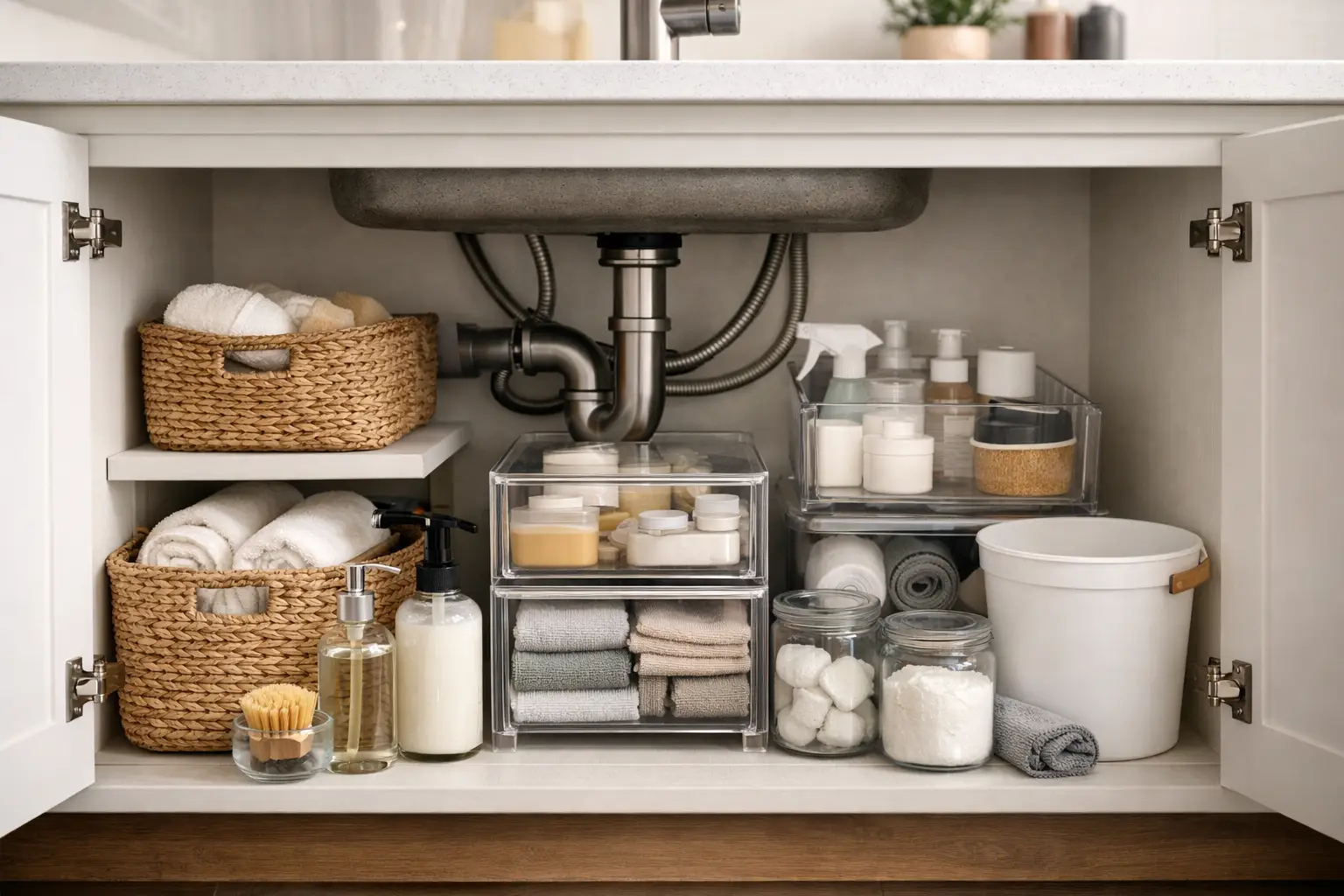
The cabinet beneath your sink can make an otherwise polished kitchen or bathroom feel needlessly chaotic. Bottles tip over, cleaning cloths disappear behind plumbing, and a single leak can turn a crowded cabinet into a frustrating cleanup. Learning how to organize under sink storage is less about buying more containers and more about designing a small, hardworking space around the items you reach for most.
With a few well-chosen organizers and an intentional layout, this overlooked cabinet can become one of the most efficient spaces in your home. The goal is simple: everything should be easy to see, easy to lift out, and easy to put back.
Start With a Clear, Measured Cabinet
Before choosing bins, drawers, or shelves, empty the entire cabinet. This is the moment to discard dried-out sponges, duplicate cleaners, expired products, and anything you no longer use. A premium-looking storage system loses its appeal quickly when it is holding clutter.
Wipe down the cabinet interior and inspect the area around the pipes, shutoff valves, and disposal unit if you are working in the kitchen. If there are signs of moisture, resolve that first. Organization works best when the cabinet is clean, dry, and structurally sound.
Then measure the usable space, not just the cabinet opening. Note the interior width, depth, height, and the exact placement of pipes. Measure around protrusions such as a garbage disposal, water filter, or pull-out hose. Under-sink cabinets are rarely symmetrical, which is why a beautiful solution often combines a few flexible pieces instead of relying on one oversized organizer.
A waterproof cabinet liner is a refined finishing touch. It protects the base from drips and makes small spills easier to manage. Choose a neutral finish if you want the cabinet to feel calm and considered every time you open it.
Create Zones Before You Add Organizers
The most useful answer to how to organize under sink storage is to separate the cabinet by function. When every item has a defined zone, daily maintenance takes only a few seconds.
In a kitchen, one side might hold dishwashing essentials: dish soap, dishwasher tablets, scrub brushes, and sponges. The other side can be reserved for surface cleaners, microfiber cloths, and trash bags. If your cabinet has a disposal or a larger pipe assembly, use the narrower side for tall bottles and the more open side for pull-out bins.
In a bathroom, divide the space between daily personal-care items and cleaning supplies. Keep contact lens solution, extra hand soap, toothpaste, and small grooming essentials close to the front if they are used regularly. Toilet cleaner, bathroom spray, and backup refills can sit farther back or in a separate caddy.
Avoid treating the cabinet as general household storage. Paint supplies, bulky paper products, and rarely used tools are better placed elsewhere. The under-sink area should support the routine that happens right in front of it.
Choose Storage That Works Around Plumbing
Fixed shelves often waste space under a sink because pipes interrupt the middle of the cabinet. Instead, favor pieces that work around those obstacles and bring items forward.
Pull-Out Bins Make Deep Cabinets Practical
A low-profile pull-out organizer is one of the best investments for deep cabinets. It keeps bottles from gathering in a dark back corner and allows you to remove an entire category at once. Use one bin for cleaning products and another for replacement supplies, rather than mixing everything together.
Look for sturdy, easy-to-clean materials and smooth movement. A removable bin is especially useful in a bathroom, where you may want to carry supplies from room to room. If cabinet doors or plumbing limit the size of a drawer-style system, simple handled bins offer much of the same convenience.
Use Vertical Space With Adjustable Shelving
The space above your bottles is valuable, even when pipes take up the center. An adjustable two-tier shelf can create room for smaller items such as sponges, gloves, soap refills, and cleaning tablets. Select an open design that lets you adjust around plumbing rather than forcing every item into a rigid layout.
For a kitchen cabinet with a disposal, a narrow shelf on either side can still create a home for compact supplies. In a bathroom vanity with fewer obstructions, a tiered organizer can double the usable surface area without making the cabinet feel crowded.
Put Cabinet Doors to Work
The inside of the cabinet door is ideal for lightweight, frequently used pieces. Adhesive-mounted baskets can hold sponges, dishwasher pods, hand towels, or small bottles. Slim hooks are useful for rubber gloves and cleaning brushes.
Keep door storage modest. Overloading the door can interfere with closing, pull on adhesive mounts, or knock into interior organizers. It is best for items that are light, flat, and used often.
Make the Most of the Pipe Area
A tension rod installed across the cabinet is a simple way to hang spray bottles by their triggers. This frees up the cabinet floor for bins and makes each bottle visible at a glance. Confirm that the rod sits securely and does not block valves or access to plumbing.
If you prefer a more tailored look, a narrow caddy positioned beside the pipes can keep spray bottles upright. The right choice depends on the cabinet: tension rods suit open areas, while caddies work better when plumbing takes up most of the center.
Keep Daily Essentials Within Easy Reach
A beautiful organizational system should make your routine faster, not ask you to work around it. Place the products you use every day in the front row or top tier. Reserve the back and lower areas for backup stock.
For the kitchen, this usually means dish soap, a sponge, and a brush or scrubber. For the bathroom, it may be hand-soap refill, dental care, or a small supply of tissues. Keep only one backup of your most-used products under the sink unless your household has a strong reason to store more.
Large quantities can overwhelm a compact cabinet and make it harder to notice what you already own. If you buy household staples in bulk, store the excess in a pantry, linen closet, laundry area, or dedicated utility shelf. Refill the under-sink zone as needed.
Clear containers can be helpful for quick visibility, while opaque baskets create a more uniform, elevated look. There is no single right choice. Choose clear storage if forgetting what you own is the bigger problem; choose matching covered or opaque bins if visual calm is your priority.
Label for a System That Lasts
Labels are not necessary for every household, but they are especially useful in shared homes, busy family kitchens, and guest bathrooms. A simple label such as “Dishwashing,” “Refills,” “Bathroom Cleaners,” or “Backstock” removes the guesswork for everyone.
Keep labels concise and place them where they can be read without removing the bin. The most sophisticated systems are not overly decorated. They are clear, consistent, and easy to maintain.
If you live with children, store cleaning products in the highest available area, use child-resistant closures where appropriate, and consider a cabinet lock. Convenience should never compromise safety. Also, avoid decanting chemical cleaners into unlabeled containers, since original labels carry important usage and safety information.
Build a Five-Minute Reset Into Your Routine
Under-sink storage stays elegant through small resets, not occasional marathon reorganizing. Once a week, return stray items to their zones, wipe up drips, and check whether sponges or cloths need replacing. Once a month, take a quick look at your supply levels before buying more.
When a product is empty, remove it immediately rather than letting it occupy valuable space. If an organizer is difficult to clean or forces you to stack items awkwardly, replace or reposition it. The best setup is the one that fits your actual habits.
Thoughtful storage brings a quiet sense of order to the places you use most. A few practical, well-crafted pieces from a curated home collection can turn a neglected cabinet into a space that feels as polished as the countertop above it. Open the door, see what you need, and let the rest of your routine feel a little more effortless.











Leave a comment