
12 Best Pet Products for Apartments That Save Space
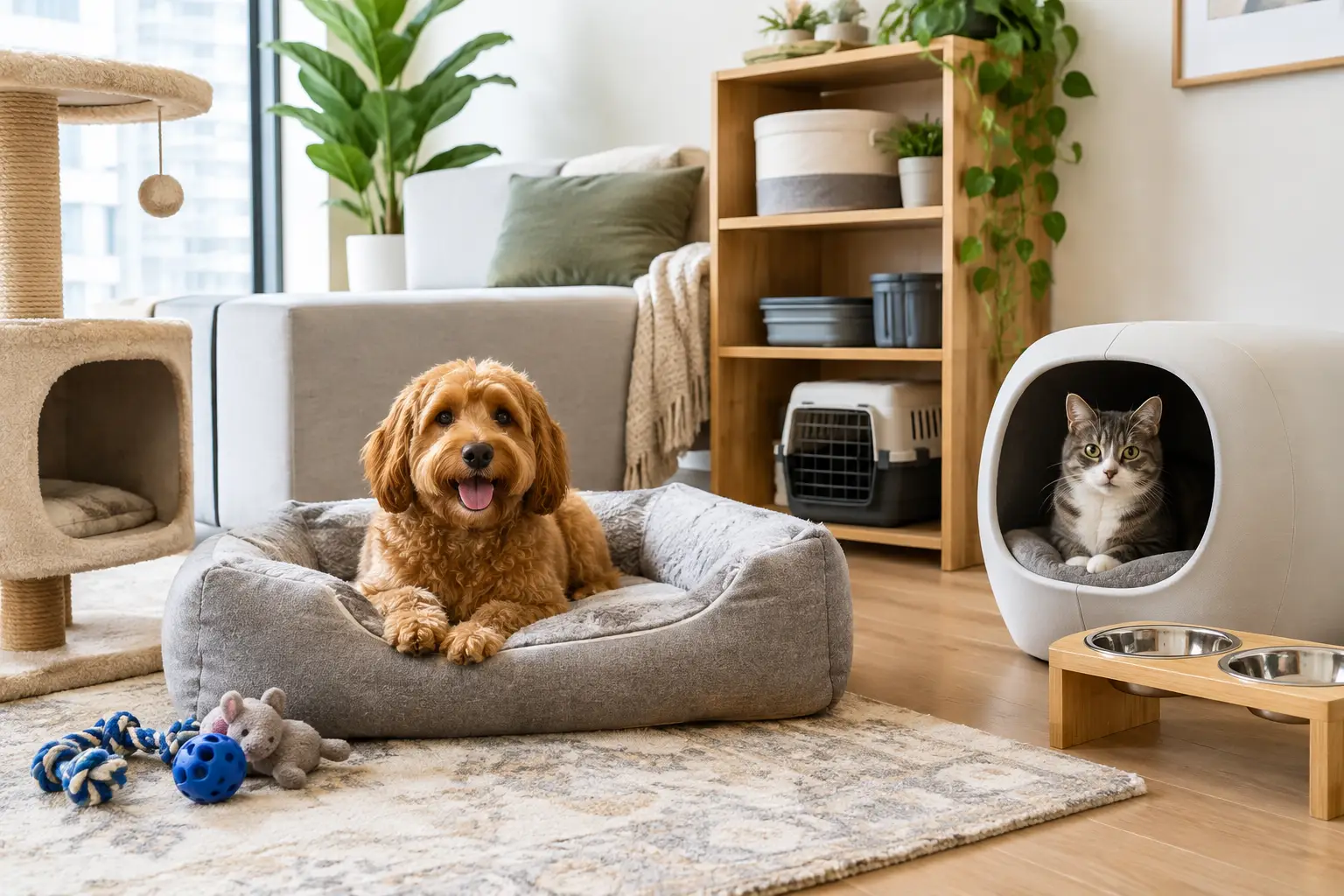
A beautifully appointed apartment should not feel compromised the moment a pet moves in. The best pet products for apartments earn their place by doing more than serving a basic need: they manage clutter, soften noise, control odor, and blend naturally with the room around them. For renters and design-conscious pet owners, the goal is simple – create a home that feels as comfortable for your companion as it does polished for your guests.
Apartment living calls for thoughtful choices rather than more things. A large backyard may be out of reach, but a well-designed bed, an elegant storage solution, or a quieter feeding station can make daily life feel calmer in a compact space.
What Apartment Pets Need Most
Square footage changes the priorities. In a house, an oversized crate can disappear into a spare room and a muddy paw-print trail can be contained near a back door. In an apartment, every item is visible and every routine happens closer to where you relax, work, and entertain.
Look for products that solve at least one of four common challenges: limited floor space, shared-wall noise, odor control, and visual clutter. The most worthwhile pieces often have a smaller footprint, a dual purpose, or a finish that complements your existing furniture. Premium materials matter here, too. A washable upholstery-grade cover or solid, stable feeding stand tends to look better over time than a temporary-looking alternative.
Best Pet Products for Apartments: 12 Smart Choices
1. A supportive, washable pet bed
A pet bed is usually the first item to consider because it establishes a dedicated place for rest. Choose a low-profile design with supportive foam and a removable, machine-washable cover. Neutral performance fabric, boucle-inspired texture, or tailored canvas can feel intentional beside a sofa or at the foot of a bed.
Measure before ordering. A bed that looks modest online can overwhelm a narrow living room, while one that is too small will simply be ignored. For pets that like to curl up, rounded beds save space. Larger dogs may be better served by a slim orthopedic mat that slides beneath a console table when not in use.
2. A furniture-style crate or gated retreat
For crate-trained dogs, a crate designed to resemble a side table can be a significant upgrade. It provides a quiet, familiar retreat without introducing an industrial-looking cage into the center of the room. Look for secure latches, smooth edges, and a top sturdy enough for a lamp, books, or a decorative tray.
This choice is not ideal for every dog. Pets who chew, push at doors, or become anxious in enclosed spaces may need a conventional heavy-duty crate for safety. Style should never outweigh proper fit, airflow, or your pet’s comfort.
3. An elevated feeding station
An elevated feeding station creates a cleaner visual line and keeps bowls from drifting across hard floors. Models with fitted stainless-steel bowls are especially practical: they are durable, easy to sanitize, and less likely to retain odor than plastic.
For a small dog or cat, select a compact stand rather than assuming taller is better. The right height depends on the pet’s size and eating habits. A modest raised edge around the base is a welcome detail for enthusiastic drinkers.
4. A waterproof feeding mat
This is a modest purchase with an outsized effect on apartment upkeep. A refined silicone or waterproof mat protects wood, tile, and rugs from splashes while keeping bowls in one orderly zone. Choose a color that works with the room rather than treating it as a purely utilitarian accessory.
A raised-lip mat is particularly useful if your pet flicks water or eats wet food. In a compact kitchen, it can mean the difference between a neatly contained feeding area and constant floor cleanup.
5. A discreet litter box enclosure
For cat owners, litter management is often the defining apartment concern. A litter box enclosure can conceal the tray inside a cabinet-like structure, offer a surface for décor, and reduce the visual disruption of an open box. Some designs work as end tables, making them a natural fit for a living room or bedroom.
Ventilation and access are the deciding details. An enclosure should be easy to open for daily scooping, spacious enough for your cat to turn comfortably, and placed away from food and water. A cramped or difficult-to-clean option may look sophisticated, but it will not stay pleasant for long.
6. A litter-trapping mat and odor-control system
Pair an enclosure with a textured litter mat to catch particles before they travel across the floor. A layered honeycomb-style mat can be effective, but only if it is simple to empty and rinse. For odor control, a covered waste pail with a tight seal keeps daily disposal more discreet between trash days.
Avoid relying on strong fragrances to mask litter odors. Regular scooping, a quality litter, and a washable mat provide a cleaner result without making a small home smell perfumed.
7. A vertical cat tree with a compact base
Cats need elevation, especially when their territory is limited to a few rooms. A tall, narrow cat tree gives them a perch, scratching surface, and private observation point while taking up less floor space than a sprawling activity center. Select a stable base and place it near a window if possible.
The most attractive cat furniture tends to use warm wood tones, woven baskets, or restrained neutral fabric. It can read more like an accent piece than pet equipment, which matters when the cat tree sits in your main living area.
8. A modern scratching post or wall-mounted scratcher
A scratching solution is not optional, but it can be beautifully considered. A substantial sisal post, a slim horizontal scratcher, or a wall-mounted panel gives cats an appropriate outlet while helping protect upholstery and door frames.
Offer more than one texture if your cat has clear preferences. Some cats favor vertical sisal; others go straight for cardboard or a flat woven mat. The right product is the one your cat actually uses, not necessarily the most decorative one.
9. A quiet water fountain
A circulating fountain can encourage pets to drink more water, an especially useful benefit in climate-controlled apartments where air can be dry. Choose a low-noise design with a dependable filter system and a capacity that suits your pet’s needs. Ceramic and stainless-steel options often feel more elevated than lightweight plastic models.
Keep maintenance realistic. Fountains need regular cleaning, and a neglected pump can become noisier than a standard bowl. If your pet is sensitive to sound, start with a quiet, wide water bowl and introduce a fountain gradually.
10. An organized pet supply basket
Treats, leashes, grooming tools, waste bags, medications, and toys accumulate quickly. A lidded basket, structured bin, or handsome storage ottoman prevents the entryway or kitchen counter from becoming pet central. It also makes everyday routines easier when essentials have one designated home.
For apartment dwellers, a narrow basket near the door is particularly useful for walk-time supplies. Keep a towel, collapsible water bowl, and paw wipes inside so leaving the apartment feels efficient rather than hurried.
11. A compact enrichment toy collection
Apartment pets benefit from mental exercise as much as physical activity. Puzzle feeders, treat-dispensing toys, snuffle mats, and lick mats can occupy a pet during work calls or rainy afternoons while slowing down fast eaters. Rotate a few toys instead of leaving everything out at once; the selection feels new more often and creates less clutter.
Choose quieter materials for upper-floor homes. Hard plastic toys that bounce across wood floors can disturb neighbors, while fabric puzzles and silicone mats offer a calmer alternative.
12. A polished entryway cleanup kit
The final detail is the one that protects the rest of your home. Keep a compact kit by the door with absorbent towels, pet-safe paw wipes, a small brush, and a mat designed to catch debris. For dogs that walk city sidewalks, this routine limits grit, moisture, and the occasional rainy-day mess before it reaches your rug.
A dedicated kit also makes pet care feel more considered. When every item is within reach, a quick clean becomes part of the return-home routine rather than another chore waiting for later.
How to Choose Without Overfilling Your Space
Start with the friction points in your own apartment. If scattered kibble and water are the issue, prioritize a feeding station and mat. If your cat tracks litter through the hallway, improve the litter zone before buying another toy. If your dog barks at every hallway sound, a comfortable retreat and more enrichment may offer more value than another decorative accessory.
It also helps to buy fewer, better pieces. One durable pet bed in the right fabric can look more refined than several inexpensive cushions. One well-proportioned cat tree can replace a collection of unstable scratchers. At Vellenor, this is the appeal of curated living: choosing practical essentials that also support the look and rhythm of the home.
Your apartment does not need to advertise that a pet lives there. With products selected for comfort, clean lines, and everyday function, it can simply feel like a home shared by someone you love.









Leave a comment